Já tem conta? Entrar

The dashed year didn't have this election here: it opens the closest office, written below.
G é Eleição Geral: presidente, governador, senador e deputados. L é Eleição Local (municipal): prefeito e vereador. De 1933 a 1990 o TSE não publica cargo municipal, então esses anos são todos G.
The same office appears twice in the year a place voted on a different date from the rest of the country (because of a postponement, for example).
In 2018, in Rio Grande do Norte, Capitão Styvenson (REDE) and Dr. Zenaide Maia (PHS) were elected to the Senate, according to data from Brazil's Superior Electoral Court (TSE).
Registered voters: voters who could vote. Turnout: how many went to the polls. Abstentions: how many stayed away (registered voters − turnout). Blank and Null: those who turned out but did not choose a valid candidate. Valid: the votes that count for candidates (turnout − blank − null); percentages are calculated on them.
3 seats in the Federal Senate: the whole chamber, adding up 1 elected in 2014 and 2 elected in 2018.
Elected seats, from the TSE results. This is the composition that came out of the ballot boxes, not the one the chamber had over the legislative term: anyone who switched parties after the election does not change this number. The count adds up those elected, without recalculating the quotient, so it matches the legal size of the chamber.
Each party by its total votes (candidate votes + party-list votes), including those that won no seat.
Click a candidate to see their candidacy history.
See on the map


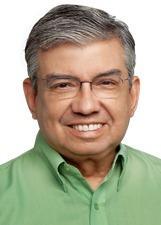




One candidacy on this list had its votes annulled, according to data from the TSE: it appears at the end, with the votes entered on the voting machines (the machine tally report), without a percentage and outside the ranking of valid votes, because these votes are not part of the valid votes. The tag next to it shows the status of the candidacy registration in the TSE data, which may still change with a decision by the Electoral Courts.
In this election each federative unit chose TWO senators. The Federal Senate is not renewed all at once: every four years one third of the seats goes to a vote (one per state) and, four years later, two thirds (two per state). In two-seat years voters chose two different names, which is why the sum of the votes exceeds the number of voters who turned out: in 2010 there were 173,007,018 valid votes for 111,038,684 voters who turned out. It is not a counting error or a double count: a single voter could produce up to two valid votes. In one-seat years the ratio goes back to normal and valid votes fall below turnout, because blank and null votes and abstentions are left out of the count.