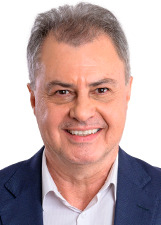
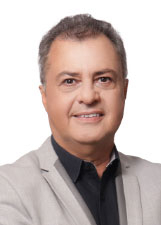
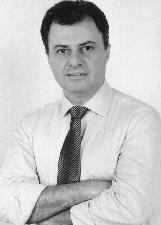
Abou Anni (PODE) became an alternate for federal deputy for São Paulo in 2026, with 23,562 votes, according to the final results from Brazil's Superior Electoral Court (TSE). Abou Anni (Paulo Sérgio Abou Anni) ran in 10 elections between 2000 and 2026, for federal deputy, city councillor and state deputy. He was elected 3 times: federal deputy in 2018; city councillor of São Paulo in 2008 and 2004. The highest vote was in 2018, for federal deputy for SP: 69,256 votes. In the Chamber of Deputies, had R$ 82.6 million committed in 22 individual amendments to the 2020 to 2023 budgets, to 39 municipalities; 99% has already been paid, counting carried-over payables. In the 2026 campaign for federal deputy for SP, reported R$ 590 thousand in income: R$ 300 thousand from the Electoral Fund (FEFC), R$ 7 thousand de outras campanhas, R$ 4 thousand from private donations and R$ 279 thousand from own funds. Contracted spending totals R$ 483 thousand, mainly on staff (R$ 216 thousand), advertising with printed materials (R$ 97 thousand) and third-party services (R$ 78 thousand). Partial amounts, according to the TSE data of 14/10/2026: the campaign finance report for this election is still in progress. In previous campaigns, already closed, spent R$ 360 thousand in 2024 (41% on mail and postage) and R$ 2.5 million in 2022.
4 sectionsTap a section title to open or collapse it.
1
Vote trend across elections
23,562 votes in 2026 · 10 elections
The votes of Paulo Sergio Abou Anni in each election they ran in, from oldest to most recent. All on the same scale (the highest vote recorded); the color shows the office.
The longest bar (the one that goes all the way) is the highest vote recorded for any office, elected or not; it works as a ruler, and all the other bars are proportional to it (the longer the bar, the more votes). What shows whether the person was elected is the fill, not the length: filled (colored) bar = elected; only the dashed outline = not elected; "to the runoff" = went to the runoff. From oldest (top) to newest. Click a bar to see the result of that election. The campaign finance report of each candidacy is in the list below.
2
Campaign funding
2026 (partial): R$ 590 thousand in income · R$ 483 thousand em gastos contratados
Abou Anni reported income and spending to the TSE in 7 campaigns: city councillor in São Paulo (SP) in 2008, 2012, 2016 and 2024, and federal deputy for São Paulo in 2018, 2022 and 2026. The amounts are those of the time of each campaign, not adjusted for inflation. In the most recent campaign, in 2026, reported R$ 590 thousand in income: R$ 300 thousand from the Electoral Fund (FEFC), R$ 7 thousand de outras campanhas, R$ 4 thousand from private donations and R$ 279 thousand from own funds. Contracted spending totals R$ 483 thousand, mainly on staff (R$ 216 thousand) and advertising with printed materials (R$ 97 thousand); R$ 378 thousand has already been paid. In 2024, 41% of the R$ 360 thousand in spending went to mail and postage; in 2022, R$ 2.5 million in spending. 2026 amounts are partial, according to the TSE data of 14/10/2026.
Income in 2026R$ 590 thousandpartial, until 14/10/2026
Spending in 2026R$ 483 thousandcontracted, partial; R$ 378 thousand paid
Spending in 2024R$ 360 thousandcampaign closed; all paid
Campaigns7from 2008 to 2026
Fundraising, where the money came from:
Electoral Fund (FEFC)
Party Fund
Other resources from the party and other campaigns
Donations from individuals (includes crowdfunding)
FEFC 80% · Party Fund 19% · individuals less than 1% · own funds 1%
Spending contracted
R$ 2.5 million
all paid (100%)
Activists and street mobilizationR$ 883 thousand35.0%
Printed materialsR$ 624 thousand24.7%
Mail and postageR$ 269 thousand10.7%
Advertising with stickersR$ 195 thousand7.7%
12 other categoriesincludes R$ 241 thousand entered as "miscellaneous, to be specified" and R$ 201 thousand donated to other candidates and partiesR$ 551 thousand21.9%
party and other campaigns 1% · individuals 9% · companies 38% · own funds 52%
Spending contracted
R$ 277 thousand
the TSE does not publish the amount paid for this year
Despesas postaisR$ 103 thousand37.0%
Printed materialsR$ 67 thousand24.0%
StaffR$ 55 thousand19.9%
Materiais de expedienteR$ 8 thousand3.0%
12 other categoriesR$ 44 thousand16.0%
Source: campaign finance reports filed with the TSE (open data). Radar do Voto has these data from 2006 on in general elections and from 2008 on in municipal elections; earlier campaigns do not appear. 2026: partial amounts, according to the TSE data of 14/10/2026; 2024: TSE data of 14/09/2026; 2022: TSE data of 13/09/2026; 2018: TSE data of 13/09/2026. Contracted spending is the total of the expenses the campaign reported; paid is the part already settled (the TSE only publishes the paid amount from 2018 on). The spending categories are the TSE's; the detail by supplier is in the dashboard. Corporate donations have been prohibited since 2015.
R$ 82.6 million committed · 99% paid · 22 amendments in 39 municipalities
Chamber of Deputies. For information only, based on public data1 · summary and analysis generated with AI2 · data updated on 10/14/20263
In the Chamber of Deputies, Abou Anni had R$ 82.6 million committed (amount pledged by the government) in 22 individual amendments to the 2020 to 2023 budgets (legislative term 2019 a 2022), to 39 municipalities. R$ 81.7 million (99%) has already been paid, counting carried-over payables. The area that received the most was Saúde (60%). The cities that received the most were Carapicuíba, São Paulo and Campo Limpo Paulista.2
CommittedR$ 82.6 million2020 to 2023 budgets
PaidR$ 81.7 million99% of the committed amount, with carried-over payables
Amendments22individual
Municipalities39different
By budget year
Budget
Committed
Paid
% paid
Amendments
Municipalities
2023
R$ 32.1 million
R$ 32 million
99%
7
19
2022
R$ 18.3 million
R$ 17.6 million
96%
4
14
2021
R$ 14.3 million
R$ 14.2 million
99%
4
13
2020
R$ 15.9 million
R$ 15.9 million
99%
7
1
Total
R$ 80.6 million
R$ 79.6 million
99%
22
39
Areas that received the most
1SaúdeR$ 49.8 million60.2%
2Encargos EspeciaisR$ 29.8 million36.1%
3UrbanismoR$ 1 million1.2%
Municipalities that received the most
1CarapicuíbaR$ 6 million7.2%
2São PauloR$ 4.2 million5.1%
3Campo Limpo PaulistaR$ 4.1 million5.0%
Source: Transparency Portal (CGU), organized by Radar do Voto, collected at the source in Oct 2026. Only individual amendments, including special transfers (the "Pix amendments"); the amount is the committed amount, and paid includes carried-over payables. Caucus, committee and rapporteur amendments, which do not have a single author, are in the dashboard.
Disclaimer. Information for reference only, organized by Radar do Voto from public data. It does not replace checking the original source: the Transparency Portal (CGU) and the Chamber of Deputies website. Radar do Voto is not responsible for decisions made based only on this information. ↩
2
Analysis generated with AI. The summary and analysis texts in this section were generated with the help of artificial intelligence from these data and may contain inaccuracies. When in doubt, the numbers from the original source prevail. ↩
3
May be out of date. Committed and paid amounts change during the year, and this section may not reflect the most recent publication from the source. Data updated on 10/14/2026, collected at the source in Oct 2026. ↩
4
Candidacies
10 candidacies · elected in 2004, 2008 and 2018
This person's history at the polls, from the most recent candidacy to the oldest.
Federal Deputy · 2026ALTERNATE23,562GSP · 60 years · White · Higher education, complete · Policial Militar · PODE · no. 2001 · see full resultcampaign finance report
City Councillor · 2024ALTERNATE17,943LSão Paulo, São Paulo · 58 years · White · Higher education, complete · Policial Militar · PODE · no. 20007 · see full resultcampaign finance report
Federal Deputy · 2022ALTERNATE39,013GSP · 56 years · White · Higher education, complete · Deputado · UNIÃO · no. 4410 · see full resultcampaign finance report
Federal Deputy · 2018ELECTED69,256GSP · 52 years · White · Higher education, complete · Policial Militar · PSL · no. 1701 · see full resultcampaign finance reportChamber of Deputies
City Councillor · 2016ALTERNATE27,334LSão Paulo, São Paulo · 50 years · White · Higher education, complete · Vereador · PV · no. 43010 · see full resultcampaign finance report
City Councillor · 2012ALTERNATE21,370LSão Paulo, São Paulo · 46 years · Higher education, complete · Vereador · PV · no. 43010 · see full resultcampaign finance report
City Councillor · 2008ELECTED22,615LSão Paulo, São Paulo · 42 years · Higher education, incomplete · Vereador · PV · no. 43010 · see full resultcampaign finance report
City Councillor · 2004ELECTED · REMAINDER14,521LSão Paulo, São Paulo · 38 years · Higher education, incomplete · Policial Militar · PV · no. 43010 · see full resultcampaign finance report
State Deputy · 2002ALTERNATE13,302GSP · 36 years · Higher education, incomplete · Policial Militar · PV · no. 43010 · see full result
City Councillor · 2000ALTERNATE4,498LSão Paulo, São Paulo · 34 years · Higher education, incomplete · Militar em Geral · PL · no. 22656 · see full result
G é Eleição Geral: presidente, governador, senador e deputados. L é Eleição Local (municipal): prefeito e vereador. De 1933 a 1990 o TSE não publica cargo municipal, então esses anos são todos G.
A candidacy without votes is a registration that did not reach the ballot: according to the TSE data, a registration not approved, a withdrawal, or a running mate, who does not receive individual votes.
The race or color is the one the person declared to the TSE in the registration of each candidacy. The Court started collecting this information in 2014; that is why it does not appear in earlier candidacies.