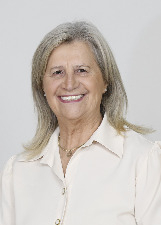
Gloria Menegotto reported income and spending to the TSE in 8 campaigns: state deputy for Rio Grande do Sul in 2006, 2010 and 2026, city councillor in Farroupilha (RS) in 2008, 2012 and 2016, mayor in Farroupilha (RS) in 2020, and federal deputy for Rio Grande do Sul in 2022. The amounts are those of the time of each campaign, not adjusted for inflation. In the most recent campaign, in 2026, reported R$ 343 thousand in income: R$ 338 thousand from the Electoral Fund (FEFC) and R$ 5 thousand de outras campanhas. Contracted spending totals R$ 338 thousand, mainly on activists and street mobilization (R$ 79 thousand) and content boosting (R$ 71 thousand); R$ 338 thousand has already been paid. In 2022, 48% of the R$ 505 thousand in committed spending went to advertising with printed materials; in 2020, R$ 62 thousand in committed spending. 2026 amounts are partial, according to the TSE data of 14/10/2026.
Income in 2026R$ 343 thousandpartial, until 14/10/2026
Spending in 2026R$ 338 thousandcontracted, partial; R$ 338 thousand paid
Spending in 2022R$ 505 thousandcontracted, campaign closed
Campaigns8from 2006 to 2026
Fundraising, where the money came from:
- Electoral Fund (FEFC)
- Party Fund
- Other resources from the party and other campaigns
- Donations from individuals (includes crowdfunding)
- Companies (until 2014)
- Own funds
Raised
R$ 343 thousand
no donations from individuals
FEFC 99% · party and other campaigns 1%
Spending contracted
R$ 338 thousand
paid so far: R$ 338 thousand (100%)
- Activists and street mobilizationR$ 79 thousand23.3%
- Content boostingR$ 71 thousand21.1%
- Printed materialsR$ 60 thousand17.8%
- Third-party servicesR$ 34 thousand10.2%
- 9 other categoriesR$ 94 thousand27.7%
Raised
R$ 500 thousand
no donations from individuals
FEFC 61% · Party Fund 39%
Spending contracted
R$ 505 thousand
paid: R$ 500 thousand (99%)
- Printed materialsR$ 243 thousand48.2%
- StaffR$ 90 thousand17.8%
- Creation and inclusion of web pagesR$ 40 thousand7.9%
- Legal servicesR$ 20 thousand4.0%
- 12 other categoriesincludes R$ 35 thousand entered as "miscellaneous, to be specified"R$ 112 thousand22.2%
Raised
R$ 95 thousand
4 individual donors
FEFC 69% · individuals 25% · own funds 6%
Spending contracted
R$ 62 thousand
paid: R$ 59 thousand (95%)
- Activists and street mobilizationR$ 17 thousand26.6%
- Third-party servicesR$ 14 thousand23.2%
- Printed materialsR$ 12 thousand19.8%
- Advertising in newspapers and magazinesR$ 7 thousand11.1%
- 6 other categoriesR$ 12 thousand19.3%
See the 5 previous campaigns
Raised
R$ 16 thousand
9 individual donors
individuals 38% · own funds 62%
Spending contracted
R$ 16 thousand
the TSE does not publish the amount paid for this year
- Activists and street mobilizationR$ 5 thousand32.6%
- Printed materialsR$ 5 thousand31.5%
- Vehicle lending or rentalR$ 2 thousand12.3%
- Advertising with stickersR$ 1 thousand6.7%
- 6 other categoriesR$ 3 thousand16.8%
Raised
R$ 8 thousand
donations from individuals
Party Fund 1% · individuals 69% · own funds 30%
Spending contracted
R$ 4 thousand
the TSE does not publish the amount paid for this year
- Printed materialsR$ 1 thousand37.8%
- Advertising in newspapers and magazinesR$ 1 thousand26.4%
- Fuel and lubricantsR$ 64616.5%
- Materiais de expedienteR$ 44011.2%
- 2 other categoriesR$ 3208.2%
Raised
R$ 42 thousand
4 individual donors
party and other campaigns 67% · individuals 8% · companies 22% · own funds 3%
Spending contracted
R$ 42 thousand
the TSE does not publish the amount paid for this year
- StaffR$ 17 thousand40.7%
- Printed materialsR$ 17 thousand39.8%
- Fuel and lubricantsR$ 3 thousand6.9%
- Advertising in newspapers and magazinesR$ 2 thousand4.7%
- 4 other categoriesR$ 3 thousand7.9%
Raised
R$ 2 thousand
no donations from individuals
own funds 100%
Spending contracted
R$ 2 thousand
the TSE does not publish the amount paid for this year
- Printed materialsR$ 2 thousand88.3%
- Fuel and lubricantsR$ 1256.6%
- Advertising in newspapers and magazinesR$ 603.2%
- Encargos financeiros e taxas bancáriasR$ 372.0%
Raised
R$ 12 thousand
donations from individuals
individuals 17% · companies 58% · own funds 25%
Spending contracted
R$ 12 thousand
the TSE does not publish the amount paid for this year
- Printed materialsR$ 7 thousand59.3%
- Advertising in newspapers and magazinesR$ 2 thousand20.3%
- StaffR$ 1 thousand11.7%
- Fuel and lubricantsR$ 6355.3%
- 1 other categoryincludes R$ 400 entered as "miscellaneous, to be specified"R$ 4003.3%
Running mates and alternates do not have their own campaign account: the account is that of the main candidate's ticket.
Source: campaign finance reports filed with the TSE (open data). Radar do Voto has these data from 2006 on in general elections and from 2008 on in municipal elections; earlier campaigns do not appear. 2026: partial amounts, according to the TSE data of 14/10/2026; 2022: TSE data of 13/09/2026; 2020: TSE data of 12/09/2026. Contracted spending is the total of the expenses the campaign reported; paid is the part already settled (the TSE only publishes the paid amount from 2018 on). The spending categories are the TSE's; the detail by supplier is in the dashboard. Corporate donations have been prohibited since 2015.
See donors, suppliers and spending ›